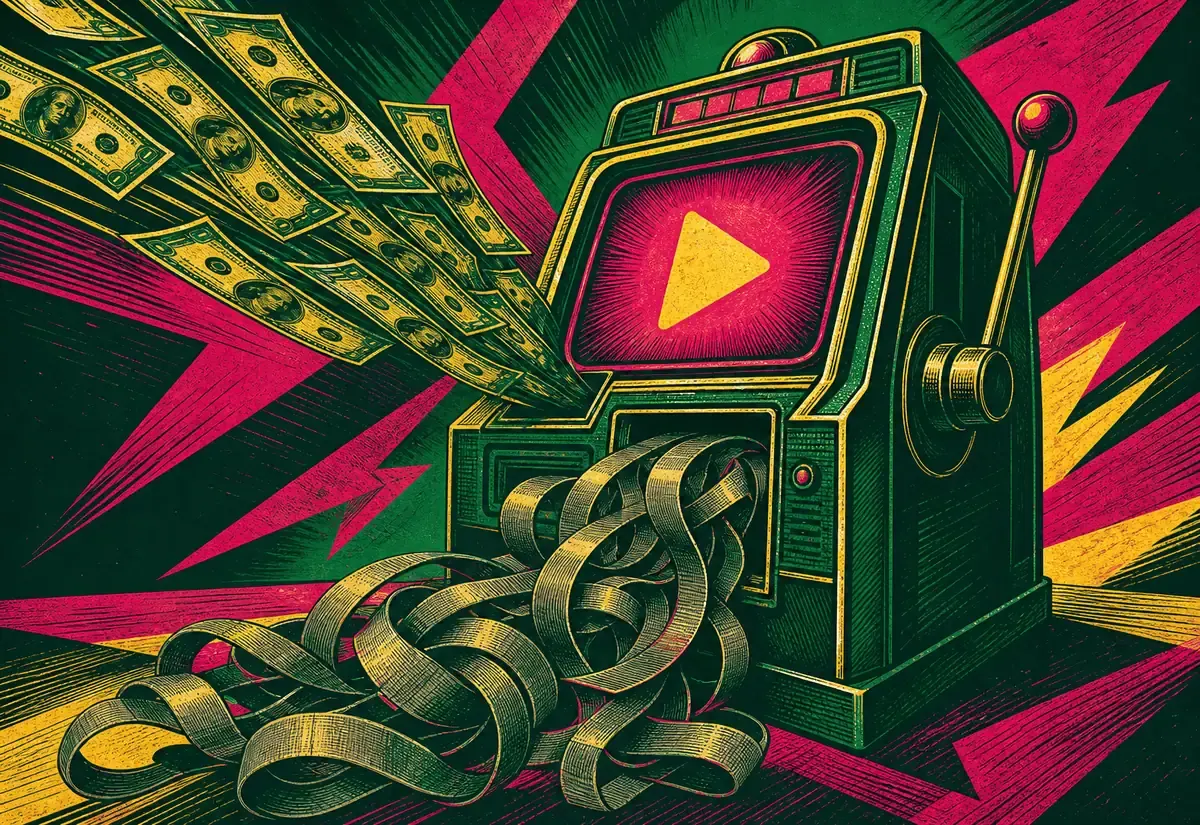
A LinkedIn guru with 350,000 followers sold me a money printer for $149.
Every page cost up to $100 to print. Most pages came out smudged.
You have seen the post. Hundreds of people in the comments, all typing the same two words like a prayer: "Youtube Automation." That was the magic phrase to get the buy link.
Do some napkin math with me. If even 5% of that crowd paid up, that one post made him around $10,000. The money printer worked beautifully. It just was not the one he was selling.
I bought it anyway. Not because I believed him. Because something did not add up. If a $149 workflow really prints content, why is not everyone running one? Either the guru forgot to mention the catch, or I am the stupid one here. I paid $149 to find out which.
What $149 actually buys
A single JSON file.
That is it. One n8n workflow, exported and sold like a treasure map. I still had to set up every step with my own API keys. Credit where due: he did include links to the services I would be paying separately. OpenAI, InVideo, Heygen, ElevenLabs, the usual suspects.
Then I ran it. One full run cost anywhere from $25 to $100, depending on how the generations landed. With zero guarantee the video would be any good. And it almost never was. You pull the lever again, and again, hoping the next one comes out fine.
Here is the price ladder nobody shows you:
- $15 to $40A freelancer on Fiverr makes you a faceless short.
- ThousandsA real production agency, for sixty seconds. You get humans, revisions, and someone accountable.
- $25 to $100The $149 "automation", per pull of the lever. The lever is a slot machine, and a half-decent video takes several pulls.
At least with an agency I would have someone I could yell at. Just kidding. Mostly.
And before you say I ran it wrong: the list price checks out at the bottom of that range. One clean pass of AI video generation costs about $25 today. The catch is the word clean. These workflows generate scenes by hit and trial, and you cannot inspect anything until the finished video lands in your lap. The brochure assumes the slot machine pays out on the first pull. It never does.
Two machines. One good video.
Left: the $149 machine. Right: the engine I built. Pull until each one gives you one video worth posting. The prices are real. The odds on the left are made up for the toy, so be kind to it.
The $149 machine
My engine
The duct tape test
Open almost any "YouTube automation" sold online and you find the same five moves:
- Ask ChatGPT to write a script from a spreadsheet cell. No check on the story, the meaning, or whether it is worth anyone's sixty seconds.
- Send the script to a voice service on default settings. You get that voiceover. The one you have heard thirty times this week. It sounds human, but nobody directed it.
- Fire prompts at an image or video generator. Either you get a pile of hit and trial frames you cannot fix, or soulless clips that suck the creativity out of the room.
- Rent music from another service.
- Stitch, upload, pray.
If every step in your workflow is someone else's API doing the thinking, you did not buy an automation. You bought tools duct-taped together, with a subscription on top.
The lazy best practice says "just connect the APIs." The APIs are not the problem. The missing judgment between them is.
First I tried to fix his
I optimized the guru's own workflow, and it still kept breaking. The thing was fragile by design. It made him his fast money. It was never built to make anyone else's.
So I rebuilt the whole idea from scratch.
I am not selling any course or workflow. There is no buy link at the bottom of this page, and no "comment AUTOMATION and I will send you the link." Just some common sense, as a service.
My engine still uses APIs. But each one does a job it is actually good at, with my judgment wired between the steps. Three things separate it from the duct tape specials.
Time, and what waiting does to your standards
Speed is not really the point. The point is the compromise a slow, blind machine trains you to make. When a re-run costs half an hour and another hundred dollars, "scene three is fine, I guess" quietly becomes your quality bar. Fast runs you can look inside keep your standards where they belong.
Cost
After the first version worked, I went back and optimized a machine that was already working, because that is the part nobody does to a demo. Better voice, faster frames. 96 cents became 79. Music costs about six cents a track. The final assembly runs on ffmpeg: free, boring, indestructible. The duct tape crowd rents an API for that step and calls it innovation.
Quality
- The script is not "ChatGPT, write something." Ideas get researched, shaped into a 15-frame story, and checked before a single cent is spent further down the line.
- The voice is directed, not defaulted. Every call tells the model exactly how this story should sound. It costs pennies more and sounds like a person who means it.
- No lottery. You never find out scene three is garbage after delivery.
And it is not just Shorts. The same engine makes 15-minute horizontal videos, or sharp vertical ones for Instagram. That is what happens when the thinking lives in the workflow instead of in the sales page.
The stress test nobody planned
I ran the engine daily on a test channel: 66 different videos in one month, unattended, while I slept.
Now the timing. In July 2025, YouTube rewrote its money rules around "inauthentic content", aimed at exactly this kind of mass-produced video. By January 2026 it had wiped 4.7 billion views of AI slop and deleted channels with 35 million subscribers between them. One study found that one in five Shorts shown to a new account is pure AI junk. The purge was real, and it is still going.
Not one of my 66 videos was flagged.
They smell like the sweat of a man who worked hard to make them.
 Iris
So the channel blew up?
 Rees
No, and I will not pretend it did. A few thousand views, single-digit subscribers. It was a test bench. I pulled the plug once it answered the question.
IrisWhich question?
ReesWhether a machine can make work that holds up under the harshest inspection YouTube has ever run. It can. That is worth more than the views, because people lose about half their trust the moment something merely feels AI-made.
IrisSlop is a shortcut, then. Just a bad one.
ReesSlop is not a shortcut. Slop is a tax on your future.
Before you buy anyone's workflow: three sniffs
- Ask what happens when one API fails. If the answer is a blank stare, you are buying a Jenga tower.
- Ask where the quality check lives. If the machine cannot tell a good output from a bad one before it spends your money, you are the quality check, and you are paying for the privilege.
- Count the steps that just call someone else's brain. Script from one API, voice from another, video from a third, thinking from nowhere. That is not automation. That is duct tape with a markup.
The trade
My engine took months of research, real engineering, and a stubborn refusal to accept "good enough for the algorithm." The $149 file takes ten minutes to import.
That is the actual trade. Templates buy you instant gratification and a fragile machine that makes money for the person who sold it. Judgment is slow, unsexy, and nobody can sell it to you in a LinkedIn post. Which is exactly why it is the last moat left.
Tools expire. Thinking compounds.
The guru's money printer is still out there, printing for him. Mine runs for 79 cents, and the next thing it builds will not be a secret.
One autopsy every Thursday
Receipts included. Subscribe to Common Sense as a Service and never pay the guru tax again.
Subscribe freeRead the newsletter version
Next storyRank on LLMI asked ChatGPT who I am. It got my job right, then showed a photo of a man I have never met.